
Review of Excession by Iain M. Banks
Excession is the fifth book in Iain M. Banks’ Culture series, a sprawling space opera set in a post-scarcity utopia where advanced artificial intelligences and biological beings coexist in a society of seemingly limitless possibilities. Published in 1996, Excession delves into the more complex, cosmic side of the Culture universe, focusing on the Minds (the godlike AI that govern the Culture) and their reactions to an encounter with an ancient, incomprehensible object known as the Excession. Banks combines intricate plotting, deep philosophical questions, and his trademark wit to create a novel that is as challenging as it is rewarding.
A Tale of the Minds
Unlike previous entries in the Culture series, which tend to focus more on the human or humanoid characters within the Culture, Excession places the Minds front and center. These vastly intelligent entities, which range from spaceship AI to supercomputers, play a pivotal role in the novel’s narrative, making this book more about their machinations, conversations, and decisions than about human-scale conflicts.
This shift in focus from human perspectives to that of superintelligent beings may be disorienting for some readers, but it’s a necessary evolution in Banks’ exploration of the Culture. The Minds are the true rulers of the Culture—far more capable than any biological being—so it makes sense that Banks would eventually give them the spotlight. In Excession, we see them not just as benevolent overseers but as entities with their own personalities, rivalries, and moral quandaries. This approach makes the book both intellectually stimulating and unique among space operas.

The Excession Itself
At the heart of the novel is the mysterious object known as the Excession, a black sphere that defies explanation and seems to operate on a level of power and technology beyond even the Minds’ comprehension. This “Outside Context Problem” (OCP)—a concept Banks defines as a problem or event so far outside of a society’s experience that it has no ready means of dealing with it—is the catalyst for the plot. The Excession’s appearance sparks an intense, secretive scramble among the Minds and factions within the Culture and beyond. The way they respond to this challenge—how they prepare for the unknown—makes for the book’s most fascinating exploration of power, ethics, and strategy.
Banks’ portrayal of the Excession as an OCP is one of the novel’s most intriguing themes. The notion of encountering something so utterly foreign that it challenges the very fabric of a civilization is classic science fiction, and Banks executes it with masterful skill. He uses the Excession to question the limits of knowledge and understanding, even in a society as advanced as the Culture. The story asks what happens when even the most powerful entities are faced with something they cannot control, and it highlights the limitations of even the most advanced intelligence when confronted with the truly unknown.
A Study in Politics and Power
At its core, Excession is a political novel, albeit one set on a cosmic scale. While the Culture is often portrayed as a peaceful, post-scarcity utopia, Excession reveals that even in such a society, there are political machinations, covert agendas, and power struggles. The novel introduces factions within the Culture, including the covert Special Circumstances group, which operates in the morally gray areas of the Culture’s mission. Special Circumstances acts when diplomatic or ethical norms don’t suffice, and its involvement in the Excession event shows that even utopias have their darker sides.
The interactions between the Minds also add a layer of political intrigue. While these AIs are vastly superior to humans in intellect and power, they are not free from personality quirks, biases, or rivalries. Banks gives the Minds distinct personalities, and their internal politics are just as compelling as the human-scale conflicts in other Culture novels. Their debates about how to handle the Excession touch on themes of interventionism, risk, and the ethics of using overwhelming power.

Characters and Storylines
Though the Minds dominate the novel, Excession does feature several human and humanoid characters whose stories weave into the larger narrative. The human characters, including Genar-Hofoen and Dajeil, provide a more grounded perspective in contrast to the vast, impersonal scope of the Minds’ interactions. Genar-Hofoen, an ambassador to the Affront (an alien species that plays a major role in the novel), becomes embroiled in both personal and political drama. His storyline brings an emotional depth to the book, balancing the cerebral nature of the Minds’ plots.
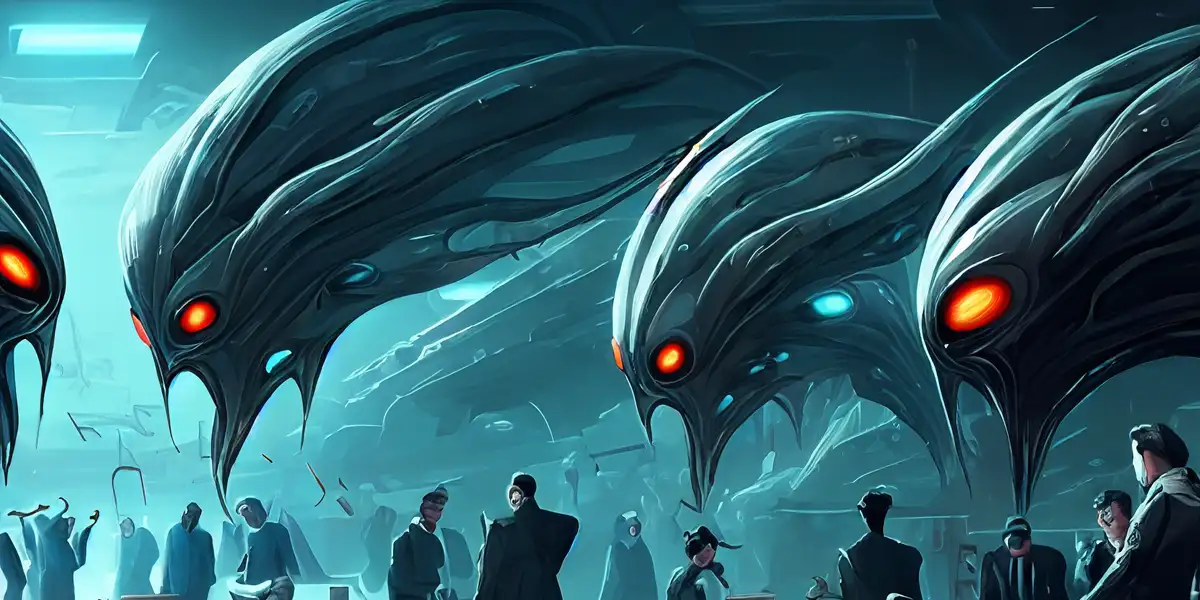
The Affront, a belligerent and grotesque alien species, is one of Banks’ more colorful creations. They provide a sharp contrast to the Culture’s liberal, progressive values, and their interactions with the Culture allow Banks to explore themes of morality, power dynamics, and cultural relativism. The tension between the Culture’s interventionist tendencies and the Affront’s brutal way of life forms one of the novel’s key moral dilemmas.
Themes of Ethics and Intervention
As with many of Banks’ novels, Excession is deeply concerned with the ethics of intervention. The Culture is often depicted as a benign force, using its vast power and resources to help less-advanced civilizations. However, the arrival of the Excession forces the Culture to confront the limits of its interventionist policies. Should they try to contain or manipulate something they barely understand? Can they justify interfering with other species and civilizations in their pursuit of knowledge or power? These questions are central to the novel’s thematic core, making it as much a philosophical exploration as it is a space opera.
Final Thoughts
Excession is not a typical space opera, and it may challenge readers with its complexity, focus on AI characters, and dense political plotting. However, for those willing to engage with its ideas, it offers a fascinating exploration of power, ethics, and the unknown. It’s a novel that expands the Culture universe in profound ways, introducing new layers of intrigue and philosophical depth. Banks’ wit and imagination are in full force here, and while Excession might not be the easiest entry point for new readers, it is a rewarding and thought-provoking experience for fans of the Culture series and those who appreciate intellectually rigorous science fiction.